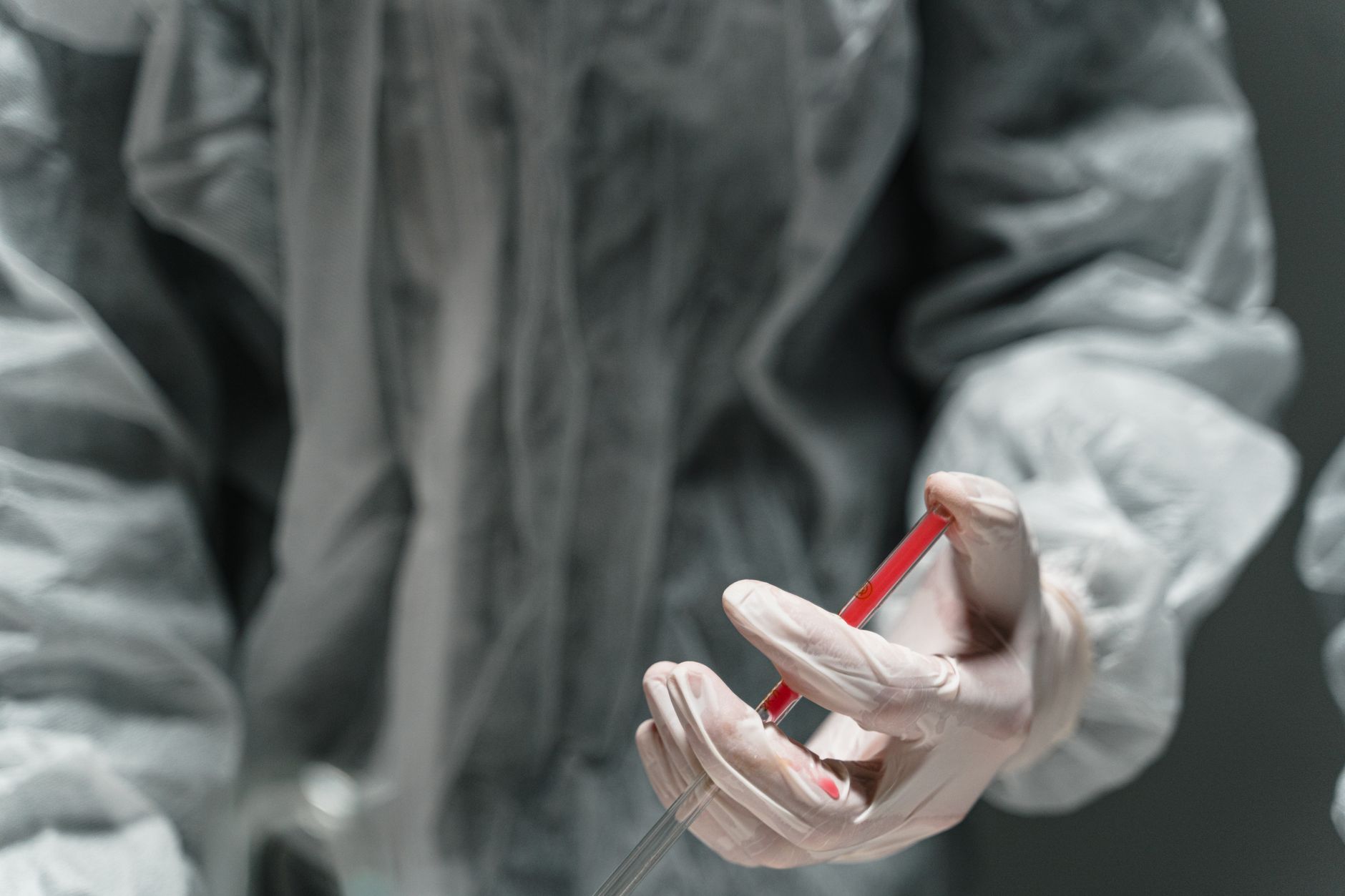
Educational / Research Use Only (RUO). GHK-Cu is not approved by the FDA or ANVISA as a drug or therapeutic. Nothing in this article constitutes medical advice. Consult a licensed healthcare professional before using any peptide compound.
What Is GHK-Cu?

GHK-Cu (glycyl-L-histidyl-L-lysine chelated with a copper(II) ion) is a naturally occurring human plasma tripeptide first isolated by researcher Loren Pickart in 1973. Plasma concentration is approximately 200 ng/mL at age 20 and falls below 80 ng/mL by age 60 (Pickart & Thaler, Nature New Biology, 1973). This age-related decline underpins research interest in exogenous supplementation.
GHK-Cu is studied — not approved — for roles in wound healing, extracellular matrix remodeling, anti-inflammation, and neuroprotection. Its primary mechanism involves copper-dependent activation of matrix metalloproteinases and upregulation of collagen, elastin, and glycosaminoglycan synthesis.
Why "How Fast" Is Not a Single Number
Speed of observed effect depends on at least four variables:
- Outcome being measured: gene expression shifts occur in hours; macroscopic tissue repair takes weeks.
- Route of administration: topical penetration is limited by the polar copper moiety; intradermal or subcutaneous delivery bypasses the stratum corneum but has no peer-reviewed human timeline data.
- Evidence model: cell culture, animal, or human — each carries different translational weight.
- Concentration and formulation: dose-response data in humans is essentially absent from published literature.
Timeline by Evidence Type
In Vitro (Cell Culture) — Fastest Signal, Lowest Clinical Weight
In cell-culture models, GHK-Cu upregulates genes associated with collagen production (COL1A1, COL3A1) and antioxidant enzymes (superoxide dismutase) within 24–72 hours of exposure. A 2018 bioinformatics analysis by Pickart & Margolina (International Journal of Molecular Sciences) identified GHK-Cu modulation of more than 4,000 human genes in the Broad Institute's Connectivity Map dataset. This is a computational finding derived from existing transcriptomic libraries — not a controlled clinical trial — and should be interpreted proportionately.
Evidence grade: in vitro and bioinformatics. Human translatability unconfirmed.
Animal Models — Low to Moderate Translational Weight
Rodent wound-healing protocols have documented measurable differences in wound closure rate and collagen density at 7–14 days post-treatment. A study by Canapp et al. (Veterinary Surgery, 2003) examined topical tripeptide-copper complex on ischemic open wounds in Sprague-Dawley rats and reported statistically improved wound closure by day 13 compared to vehicle controls. This is a rodent model; direct extrapolation to humans is not established.
Evidence grade: animal (rodent). Effect sizes varied across studies; species differences in healing biology limit translational confidence.
Human Studies — Most Relevant, Most Limited
The human evidence base is thin. Available data come from small observational pilots and industry-sponsored trials using topical GHK-Cu formulations over 8–12 week windows, measuring skin laxity, wrinkle depth, and collagen density via ultrasound or biopsy. Sample sizes are typically below n = 50, and most studies lack blinding or pre-registered primary endpoints. No large randomized controlled trial (RCT) meeting current CONSORT standards has been published as of mid-2026.
A review by Pickart, Vasquez-Soltero, and Margolina (BioMed Research International, 2015) synthesized available human skin data and concluded that GHK-Cu "modulates multiple cellular pathways" relevant to skin aging — while explicitly noting that robust clinical trial evidence remains lacking.
Evidence grade: limited human data, primarily small pilots. Treat claims with proportionate skepticism.
Approximate Research Timelines at a Glance
| Endpoint | Model | Observed Window | Evidence Strength |
|---|---|---|---|
| Gene expression shifts | In vitro | 24–72 hours | Low (cell culture only) |
| Wound closure improvement | Animal (rodent) | 7–14 days | Low–Moderate (rodent) |
| Skin texture / collagen changes | Human (topical) | 8–12 weeks | Low-moderate (small pilots) |
| Hair follicle stimulation | Animal / in vitro | 2–4 weeks | Low (preclinical only) |
Route of Administration and Speed

Topical application is the most studied route for skin endpoints. The GHK peptide backbone has a molecular weight of approximately 340 Da; the full GHK-Cu complex (with the Cu²⁺ ion chelated) is approximately 403 Da. Both values fall below the 500 Da threshold generally considered favorable for passive epidermal diffusion, but the charged copper ion significantly limits transdermal penetration through intact skin in practice. Intradermal or subcutaneous injection bypasses this barrier and may accelerate bioavailability — but this route has no peer-reviewed human timeline data and carries meaningful risk versus topical use. Any injectable use remains strictly RUO.
Regulatory Status
- FDA: GHK-Cu is not approved as a drug. In topical form it is used as a cosmetic active ingredient (labeled copper tripeptide-1) and does not require pre-market drug approval. As of April 2026, the FDA removed injectable GHK-Cu from its Category 2 bulk substances restricted list, which had previously blocked compounding; a Pharmacy Compounding Advisory Committee (PCAC) review is scheduled for February 2027. Removal from Category 2 is not drug approval — it reopens the pathway for licensed 503A compounding pharmacies to prepare injectable GHK-Cu with a valid patient-specific prescription, pending the PCAC outcome. Confirm current compounding status with a licensed pharmacy before any clinical use.
- ANVISA (Brazil): GHK-Cu has no ANVISA registration for therapeutic use as of 2026. Injectable GHK-Cu is not approved for any indication in Brazil; ANVISA authorizes only peptides present in already-registered medications. Topical GHK-Cu in cosmetic formulations is subject to applicable RDC cosmetics rules. Compounding is subject to applicable RDC pharmacy rules; confirm current status with a licensed compounding pharmacist before dispensing.
- WADA: GHK-Cu is not explicitly named on the WADA 2026 Prohibited List. Athletes must not treat this as clearance for injectable use. WADA's Category S0 (Non-Approved Substances) prohibits any pharmacological substance not currently approved by any governmental regulatory authority for human therapeutic use; injectable GHK-Cu has no such approval anywhere and is likely captured by S0. WADA's Category S2.3 (growth factors, related substances, and mimetics) contains broad catch-all language that may also apply to a peptide with documented tissue-regenerative and gene-modulating effects. Competitive athletes subject to anti-doping rules must consult the WADA 2026 Prohibited List, the Athlete Reference Guide, and their national anti-doping authority before using any GHK-Cu formulation — particularly injectable.
Related Peptides in the Research Literature
GHK-Cu research intersects with other peptides studied for tissue repair, aging biology, and immune modulation. The PeptideMed catalog covers:
- Epithalon — a tetrapeptide studied for telomerase activation and longevity signaling, primarily in animal models and limited Soviet-era human data.
- BPC-157 — a pentadecapeptide with extensive rodent wound-healing and organ-protection data; no published human RCT as of mid-2026.
- Thymalin — thymic peptide studied for immune modulation and longevity in Soviet-era controlled trials, some involving human subjects.
Bottom Line for Researchers
GHK-Cu demonstrates measurable activity in cell and animal models within 24 hours to 14 days, but translating those timelines to human outcomes requires caution. The most defensible human estimate — based on the small topical-study literature — is 8–12 weeks of consistent application for skin-related endpoints. Injectable timelines in humans are not characterized by any published peer-reviewed data.
Researchers and clinicians evaluating GHK-Cu should prioritize pre-registered outcome measurement, validated assessment tools, and direct engagement with primary literature over anecdotal or commercial sources.
This article is educational and for research purposes only. GHK-Cu is a Research Use Only (RUO) compound. Nothing here constitutes medical advice, diagnosis, or treatment recommendation. Seek guidance from a licensed healthcare professional.